
Prepared by Dr. Erhan OKAY
Fibrous dysplasia (FD) is a benign bone disorder characterized by the replacement of normal bone with fibro-osseous tissue, leading to pain, deformity, and fractures. It results from post-zygotic GNAS gene mutations that disrupt osteoblastic differentiation. FD may be monostotic (single bone) or polyostotic, the latter often occurring as part of McCune–Albright syndrome (MAS). Radiologically, it presents with a ground-glass appearance and possible deformities such as the “shepherd’s crook” in the proximal femur. Treatment is primarily symptomatic, involving bisphosphonates for pain control and surgery for deformity or fracture correction. Although benign, the disease may progress during growth and stabilize in adulthood, requiring periodic follow-up for skeletal deformity and functional assessment.
Pathophysiology
Clinical Presentation & Imaging
Differential Diagnosis
Treatment
Medical Management
Surgical Management
Prognosis
References

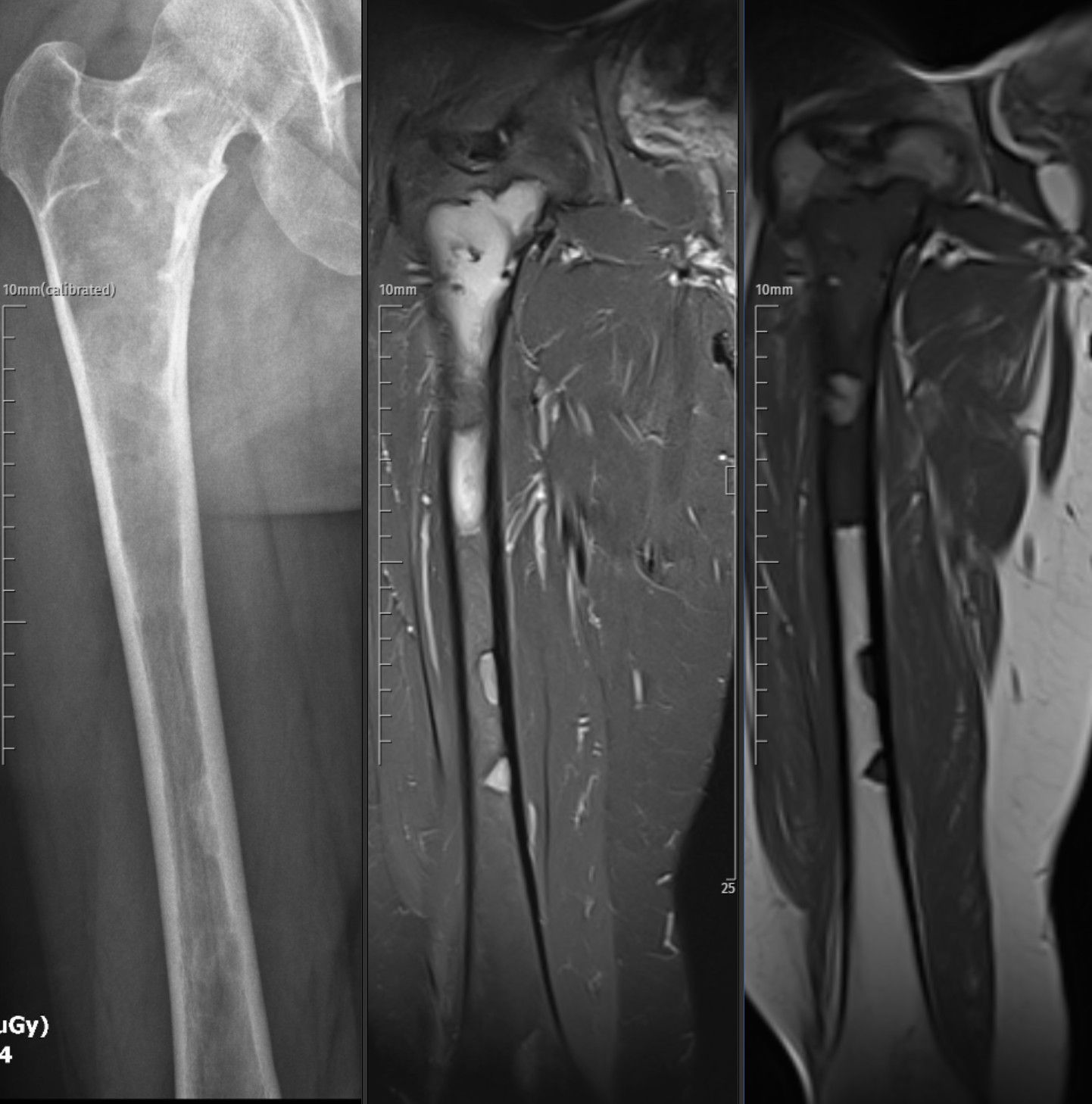
| Aspect | Details |
| Nature | Benign fibro-osseous lesion replacing normal bone with fibrous tissue |
| Genetic Basis | GNAS mutation causing defective osteoblastic differentiation |
| Forms | Monostotic (single bone) and Polyostotic (multiple bones, often with McCune–Albright syndrome) |
| Common Sites | Femur, tibia, ribs, craniofacial bones |
| Characteristic Imaging | “Ground-glass” matrix, cortical thinning, shepherd’s crook deformity (proximal femur) |
| Symptoms | Bone pain, deformity, limp, or pathologic fracture |
| Treatment | Pain control (NSAIDs), bisphosphonates for bone turnover reduction, surgery for deformity/fracture |
| Prognosis | Benign course; stabilizes after skeletal maturity; annual follow-up for polyostotic cases |